
Scientific Cognitive Health Assessments
Charlotte Fraser seamlessly integrates scientific Creyos Health assessments into all her nutrition consultations, providing an objective and measurable way to track your progress over time.
By recognising the profound connection between gut and brain health, her approach includes a series of engaging tasks that evaluate memory, reasoning, verbal ability, and attention—key components of cognition crucial to your daily functioning. Tailored to individual needs, these assessments extend to specific health conditions such as Adult ADHD, Anxiety, Autism, Early Alzheimer’s, Depression, Menopause, Sleep, Stress, Stroke, Multiple Sclerosis, Non-Alzheimer’s Dementia, and Parkinson’s.
Why measure cognition?
There is an old saying that “if you can’t measure it, you can’t manage it,”and this applies to health and wellbeing too. We all have a subjective idea of how our brains are doing—some days we feel “off” or experience “brain fog,” while on other days we feel like we can take on the world. But how much better are we on the good days? And are lifestyle or health changes making a difference?
That’s where cognitive assessment comes in. By quantifying or putting a number to these subjective feelings, we can discover what is causing the good days in order to have more of them.
An engaging and scientifically-validated cognitive assessment
We assess core areas of cognition and emotional wellbeing to establish where you are now and create a meaningful baseline at the start of your nutrition programme. You complete the Creyos Health cognitive assessment online before your initial consultation and, where appropriate, may also complete the PHQ-9, GAD-7 and Perceived Stress Scale (PSS). You are invited to repeat the same assessments before your follow-up consultation. Comparing the results enables us to monitor changes in cognition, mood, anxiety and perceived stress, measure progress objectively and evaluate how your cognitive and emotional wellbeing may be responding alongside your personalised nutrition and lifestyle programme.
The tasks assess aspects of cognition including reasoning, memory, attention and verbal ability.


An engaging and scientifically-validated cognitive assessment
Validated by decades of scientific research, Creyos Health measures the most important aspects of cognition. Performance is directly linked with the areas of your brain that are active when you are at your sharpest. But more importantly, the tasks are fun, and only take 1.5 – 3 minutes each to complete. Now, not only will you feel better, but you can objectively , scientifically track how your brain is responding to your nutrition and wellness programme.
Is this an IQ test?
No. Creyos Health does not test or assign an IQ score.
Think of it as being similar to a blood-pressure cuff for the brain: it provides a snapshot of how particular areas of your cognitive function are performing at that time.
The purpose is not to judge or score you, but to establish meaningful baseline measures and monitor changes over time.
It is also not a brain-training programme. We do not use the tasks to train your brain through repeated games or exercises. Instead, the assessment provides objective information that helps us understand your cognitive health and inform personalised nutrition and lifestyle recommendations.
Are cognitive assessments really relevant to me?!
Cognitive health affects almost every aspect of daily life. Memory, concentration, attention, reasoning and verbal ability can all be influenced by factors such as sleep, stress, nutrition, hormonal changes, digestive health, pain and fatigue.
Even concerns traditionally viewed as physical, such as persistent pain or constipation, may affect cognition. Cognitive and emotional health may also influence how physical symptoms are experienced.
Cognitive assessment can therefore be relevant whether you have a specific cognitive concern, experience symptoms such as brain fog, or simply want to monitor your cognitive performance and resilience over time.
Because Creyos Health results are interpreted using comparisons with people in a similar age range, assessments can provide meaningful information for children aged approximately six and over, young people, adults and older clients.
What do results look like?
Your Creyos Health report presents your results in a clear and accessible format.
The information becomes increasingly valuable when assessments are repeated, allowing changes and meaningful patterns to be monitored throughout your nutrition programme.
A sample Creyos Health Cognitive report is available here.
More detailed information on the Creyos Health Cognitive Assessment is available here.
Health-Screening Questionnaires
Where appropriate, validated, age-appropriate health-screening questionnaires may be used alongside the Creyos Health cognitive assessment.
Questionnaires are selected according to the client’s age, health history and individual circumstances. They can provide additional measures relating to mood, anxiety, perceived stress, attention, behaviour and other areas of wellbeing.
These questionnaires can help establish baseline measures and monitor changes over time. They are screening and monitoring tools and do not provide a medical, psychological or neurodevelopmental diagnosis.
If a client’s answers or results indicate that further investigation or support may be appropriate, we may recommend discussing them with a GP or another suitably qualified healthcare professional.
PHQ-9 Assessment for Depression

The PHQ-9 is a nine-question screening questionnaire used to measure the presence and severity of symptoms commonly associated with depression. It can also help monitor how reported symptoms change over time.
The questionnaire is completed online and ordinarily takes approximately three minutes.
The PHQ-9 is widely used in healthcare and research settings. It is a screening and monitoring tool, not a standalone diagnostic assessment. A diagnosis of depression can only be made by an appropriately qualified healthcare professional.

GAD-7 Assessment to Measure Anxiety
The GAD-7 is a seven-question screening questionnaire used to measure symptoms commonly associated with generalised anxiety.
When used alongside the PHQ-9, cognitive assessments and information gathered during a consultation, it can contribute to a broader understanding of a client’s cognitive and emotional wellbeing. It may also help monitor how reported symptoms change over time.
The GAD-7 does not provide a diagnosis of an anxiety disorder. Clients experiencing significant or persistent symptoms should seek advice from their GP or an appropriately qualified mental-health professional.
The PSS (Perceived Stress Scale)
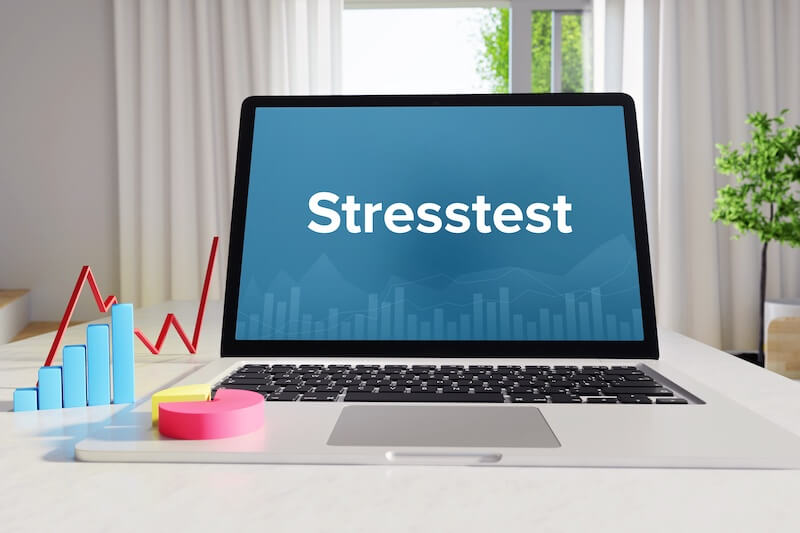
The Perceived Stress Scale is a self-report questionnaire that explores how stressful or overwhelming an individual has found aspects of their life during a specified period.
It may be used to establish a baseline and monitor changes in perceived stress throughout a personalised nutrition and lifestyle programme.
Results are considered alongside the client’s health history, current circumstances and other relevant information. The questionnaire is not a diagnostic assessment and does not diagnose a stress-related or mental-health condition.
Combining Cognitive and Wellbeing Measures
The Creyos Health cognitive assessment is included in every consultation. Where appropriate, the PHQ-9, GAD-7 and PSS provide additional measures of mood, anxiety and perceived stress.
Together, these four assessments provide valuable baseline measures and progress check-ins that help us evaluate and personalise each nutrition programme.
Stress—and how we perceive and respond to it—is an important consideration in gut, brain and whole-body health.The Creyos Health cognitive assessment, together with the PHQ-9, GAD-7 and PSS form a powerful quartet. Together they can be used as key outcome measures and mid-point check-ins to evaluate and customise your nutrition programme. Stress and how we perceive it or respond to it is integral to gut health.
Autism Spectrum Quotient (AQ)
The Autism Spectrum Quotient is a self-report screening questionnaire designed to explore traits that may be associated with autism.
The questionnaire does not diagnose autism. If the results or a client’s concerns indicate that further investigation may be appropriate, the client should discuss this with their GP or a suitably qualified professional who can advise on a formal diagnostic assessment.
ASRS Screen for ADHD in Adults (over 16 Years)
The Adult ADHD Self-Report Scale is a short screening questionnaire for adults aged 16 and over. It measures symptoms that may be consistent with attention-deficit/hyperactivity disorder.
Results are considered alongside relevant health information and selected cognitive tasks within the Creyos Health assessment.
The ASRS does not diagnose ADHD. A formal diagnosis requires a comprehensive assessment by an appropriately qualified healthcare professional.
Strengths and Weaknesses of Attention-Deficit/Hyperactivity Disorder Symptoms and Normal Behavioural Scale (SWAN)
The SWAN is an 18-question rating scale completed by a parent or teacher. It explores strengths and difficulties associated with attention, activity and behaviour in children and young people.
The SWAN can help identify and monitor traits associated with ADHD. It is a screening and monitoring tool and does not provide a diagnosis.

Vanderbilt ADHD Diagnostic Rating Scale (VADRS)
The Vanderbilt ADHD Diagnostic Rating Scale is a questionnaire completed by a parent or teacher for children aged 6–12.
It explores the frequency and severity of behaviours associated with ADHD, including inattention, hyperactivity and impulsivity. It also includes questions relating to emotional and behavioural concerns that can occur alongside ADHD.
Despite its formal name, the Vanderbilt scale does not provide a diagnosis when used by itself. A diagnosis of ADHD requires a comprehensive assessment by an appropriately qualified healthcare professional.
Age-Appropriate ADHD Questionnaires
Creyos Health provides ADHD questionnaires designed for different age groups. The ASRS may be used with adults, while the SWAN and Vanderbilt questionnaires may be used with children or young people when appropriate.
Selecting questionnaires according to age enables us to combine objective cognitive measures with relevant information about attention, behaviour and reported symptoms.
These questionnaires do not diagnose ADHD. They can help identify areas that may warrant further investigation and monitor changes over time.
RPQ Rivermead Post-Concussion Symptoms Questionnaire
The Rivermead Post-Concussion Symptoms Questionnaire is a self-report measure used to record the presence and severity of symptoms that may occur following a concussion.
It explores physical, cognitive and emotional symptoms and can help monitor how reported symptoms change over time. It does not diagnose concussion or another neurological condition.
Anyone who has experienced a recent head injury or has new, worsening or concerning neurological symptoms should seek appropriate medical attention.
PTSD Checklist for DSM-5 (PCL-5)
The PTSD Checklist for DSM-5 is a 20-question self-report measure used to assess and monitor symptoms associated with post-traumatic stress disorder.
The PCL-5 is a screening and monitoring tool. It does not provide a standalone diagnosis of PTSD, which requires assessment by an appropriately qualified healthcare professional.
Book a Creyos Health Consultation
Creyos Health cognitive assessment is included as an integral part of every consultation at Charlotte Fraser Naturopathic Nutrition.
Book your consultation to establish your cognitive baseline and begin monitoring how your cognition, nutrition and wider wellbeing change over time.